Introduction
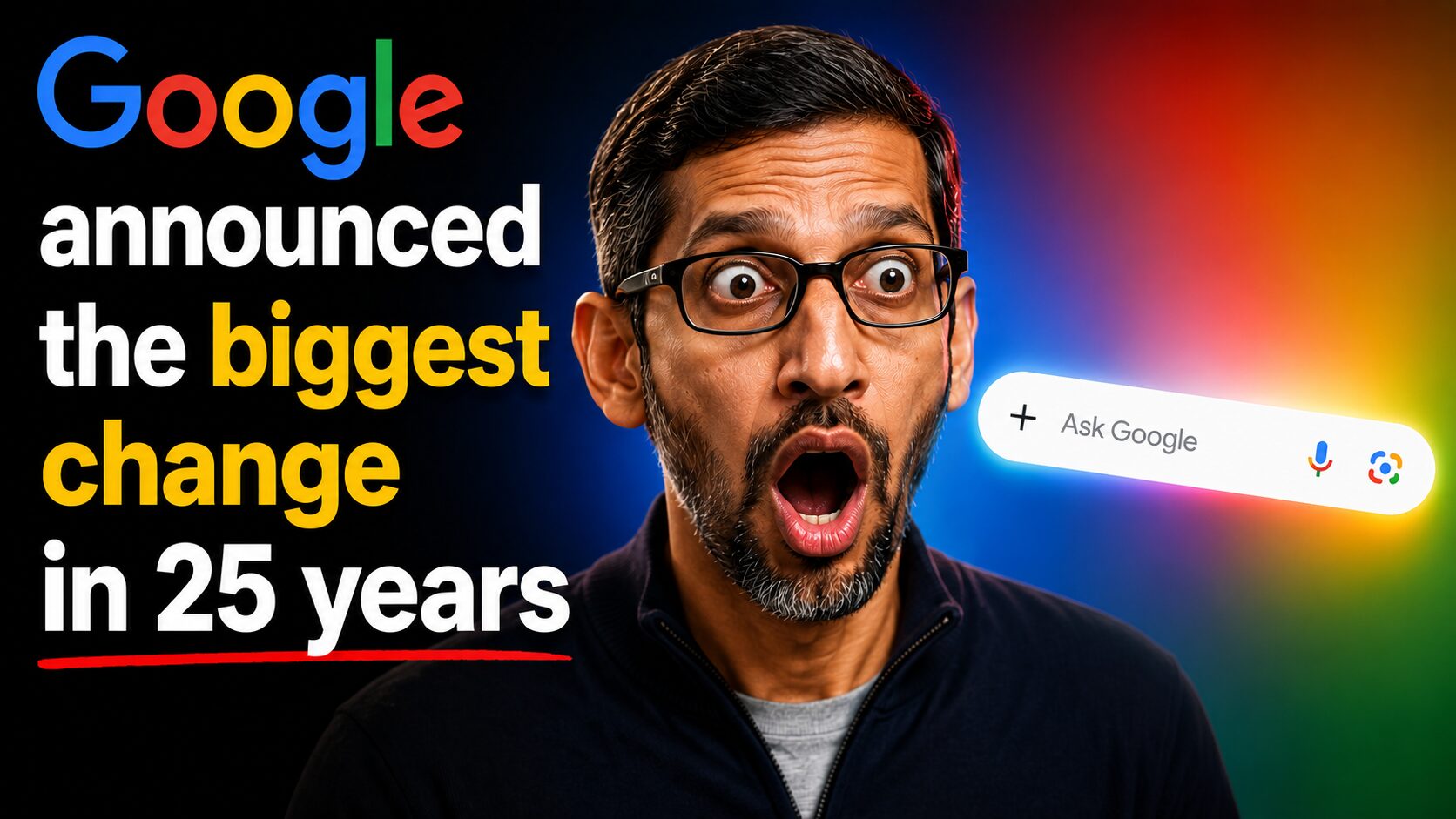
At Google I/O recently, Google announced a complete reimagining of Search powered by Gemini 3.5 Flash. AI Mode, which launched just a year ago, has already surpassed one billion monthly users with queries more than doubling every quarter. Google is now making AI the default experience, not an optional mode. Here is what changed and what it means for anyone who uses or markets through Google Search.
The Search Box Is Completely Different Now
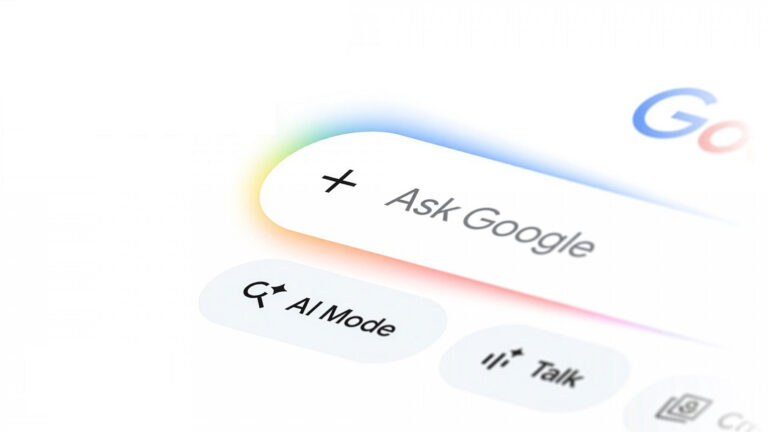
The most visible change is the search box itself. It now dynamically expands to give users space to describe exactly what they need rather than compressing intent into a few keywords. AI-powered suggestions go beyond autocomplete, helping users articulate questions they might otherwise struggle to express.
Google has also introduced multimodal search. Users can now search using text, images, files, videos, or open Chrome tabs alongside their query. Gemini 3.5 Flash powers AI Mode as the default model for everyone globally.
The results page has changed too. Instead of a list of blue links, Search now generates a custom AI summary followed by a conversational flow where users can ask follow-up questions. Context carries across the conversation, so deeper exploration surfaces increasingly relevant links and supporting articles.
Search Agents: Google Now Works in the Background
This is the most significant shift for daily users and the one with the furthest-reaching implications.
Information agents run continuously in the background, monitoring the web across blogs, news sites, social posts, and real-time data, including finance, shopping, and sports. Users define what they want monitored, and the agent sends a synthesised update when something relevant happens. Someone apartment hunting can specify exact requirements, and the agent scans continuously, notifying them when a matching listing appears.
Agentic booking takes this further. Users specify detailed criteria for local experiences or services, and search surfaces pricing and availability with direct booking links. For categories like home repair, beauty, and pet care, Google has introduced the ability for Search to call businesses on behalf of the user.
For ongoing tasks like planning a home move or building a fitness routine, Search can now generate a custom tracker or dashboard pulling from live data sources. Google describes these as personalised, task-specific experiences users can return to over time.
Personal Intelligence: Google Now Knows Your Context
Google is expanding Personal Intelligence in AI Mode to nearly 200 countries across 98 languages. Users can connect Gmail and Google Photos, with Google Calendar support arriving soon. Search factors in the personal context from connected apps when generating responses. Google states that users control which apps are connected and can disconnect them at any time.
What This Means for Businesses, Publishers, and Marketers
This is where the change stops being a product announcement and starts being a business problem.
Blue links were the foundation of SEO, content marketing, and website traffic for 25 years. News publishers already reported significant traffic declines recently as AI chatbots replaced Google as the primary discovery tool. This change accelerates that trend directly.
Small businesses that relied on Google organic traffic to acquire customers are already reporting drops. Lily Ray, VP of SEO strategy at Amsive, warned the changes will "severely cut into the main source of revenue for most publishers" and "disincentivise content creators who rely on organic search traffic, which is millions of websites." The Verge noted bluntly that "Google doing everything also means a lot of the web that Google relies on collapses under it."
The question for every business is no longer whether this affects them. It is how quickly and what the new strategy looks like.
What You Should Actually Do About This
SEO strategies built purely around keyword rankings and blue link clicks need to evolve now, not when traffic drops become undeniable.
Content that provides genuine depth, original perspective, and human insight is more likely to be cited inside AI summaries than thin, keyword-optimised articles. Being the answer inside an AI response is the new organic result. Understanding how to appear in those summaries is the new SEO.
For marketers, paid search and direct audience relationships through email, newsletters, and owned channels become significantly more valuable as Google-driven referral traffic continues to shift. Businesses that build direct relationships with their audience now will be far less exposed to what happens next.
Conclusion
Google Search was the front door of the internet for 25 years. That door is being rebuilt around AI. The blue link era is not disappearing overnight but the direction is unambiguous and the pace is faster than most businesses are moving.