AI Blogs

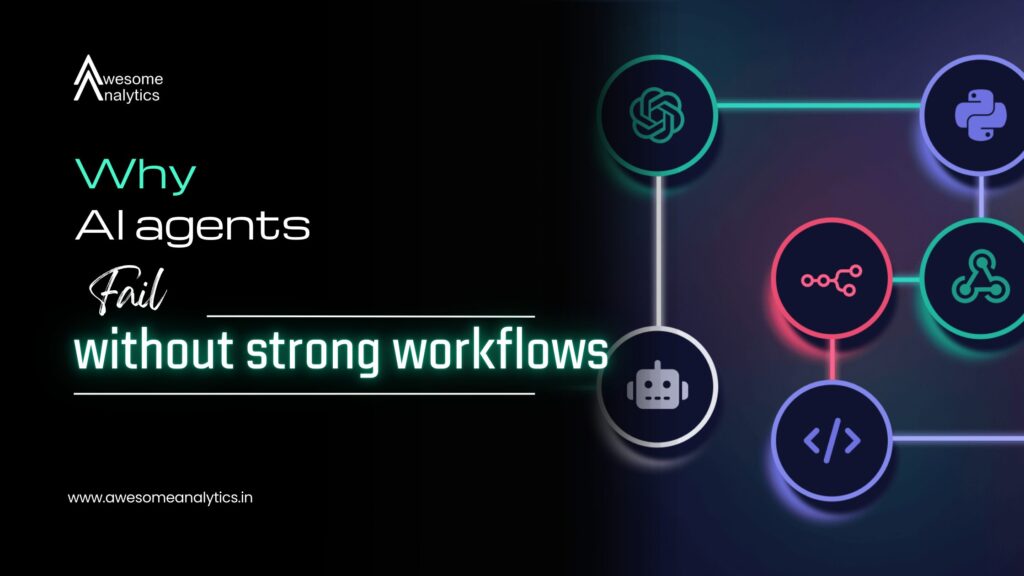
Why AI agents fail without strong workflows

Why AI agents fail without strong workflows

AI agents are having a moment. They plan tasks, reason across steps, and respond like a capable assistant. Demos look smooth. Early trials feel impressive. It is easy to think that once an agent is added, the work will take care of itself.
Then reality shows up. Tasks stall. Outputs need fixing. Humans quietly step back in. The agent is still there, but the workflow is doing most of the heavy lifting.

This is not because AI agents are weak. It is because workflows decide whether they succeed or struggle.

Why AI agents fail without strong workflows Read More »

ChatGPT 5.2 is the most practical AI release of the year

ChatGPT 5.2 is the most practical AI release of the year

AI model launches no longer create excitement the way they once did. Updates are frequent, version numbers keep changing, and many releases feel incremental. ChatGPT 5.2 arrived quietly, and most people barely noticed. Yet this version introduces changes that matter more in real work than in demos.

This blog explains what actually changed in ChatGPT 5.2, where it performs better, and why this update is more relevant than it initially appears.

ChatGPT 5.2 is the most practical AI release of the year Read More »

Kimi K2 versus GPT and Claude (Honest review of China’s latest AI tool)

Kimi K2 versus GPT and Claude (Honest review of China’s latest AI tool)

Moonshot, a fast growing Chinese AI startup, recently introduced Kimi K2. It has created interest because of its long context window, natural reasoning style, and claims of competing with models like GPT 5 and Claude.

This blog gives a simple and honest review of what Kimi K2 does well, where it struggles, and what it means for users who rely on AI for real work.

Kimi K2 versus GPT and Claude (Honest review of China’s latest AI tool) Read More »

The truth about AI automation nobody tells you

The truth about AI automation nobody tells you

Every week, there’s a new promise that AI will handle entire workflows from automating emails to managing complete projects. The hype sounds great, but a new benchmark from Scale AI and the Center for AI Safety shows a different reality.

In the study, AI agents were tested on real freelance tasks like writing, research, data entry, and design. Out of nearly $144,000 worth of work, the top model earned only about $1,800 completing just 2 to 3 percent of jobs successfully.

This doesn’t mean AI is weak. It means organizations are skipping the most important part of AI success: workflow design.

The truth about AI automation nobody tells you Read More »

AI tools that Small businesses and Startups must use in 2025

AI tools that Small businesses and Startups must use in 2025

Small businesses and startups often run with lean teams. That means time, money, and focus are always stretched. AI can help by removing repetitive tasks so employees can focus on growth. Here’s a curated list of AI tools that cover the most important areas, from writing to designing, project management to customer support.

AI tools that Small businesses and Startups must use in 2025 Read More »

Comparing the top AI browsers in 2025

Comparing the top AI browsers in 2025

The web browser has always been our front door to the internet. For years, they were simple tools to access websites. But in 2025, browsers are no longer just windows. They are turning into assistants. With AI built directly inside, browsers now summarize pages, answer questions, and even perform tasks for you.

The competition is heating up, and several companies are racing to become the go-to AI browser. Here’s a clear look at the main contenders, what each offers, and how you can decide which one suits your needs.

Comparing the top AI browsers in 2025 Read More »

Who is winning the AI race

Who is winning the AI race in 2025: Google vs Meta vs Microsoft vs OpenAI

Everyone asks the same thing. Who is really ahead in AI right now? Your workday answer depends on two things. The quality of models and the reach into tools people already use.

In this issue, I compare OpenAI, Google, Microsoft, and Meta using a short, practical lens so you can see who leads where and why. I will keep it simple with proof of course.

Five lenses keep this tight and useful. Innovation, Adoption, Integration, Monetization, and Safety. Under each lens, I give one clear call on who leads and why, with quick notes on the others.

Who is winning the AI race in 2025: Google vs Meta vs Microsoft vs OpenAI Read More »