Introduction
The question of whether AI is in a bubble used to be a fringe opinion. It is now being asked inside the US Treasury, the Bank of England, and the IMF simultaneously. This blog is not here to predict a crash or dismiss the concern. It is here to lay out the evidence so you can form your own judgment.
The Math That Does Not Add Up
The four largest tech companies combined spent $90 billion on AI infrastructure in 2020. That figure is projected to hit $725 billion in 2026. According to a PIMCO report, AI capital expenditure will consume 94% of big tech's operating cash flows over the next two years. JP Morgan analysis suggests the AI sector needs to generate $650 billion in annual revenue just to give investors a minimal 10% return.
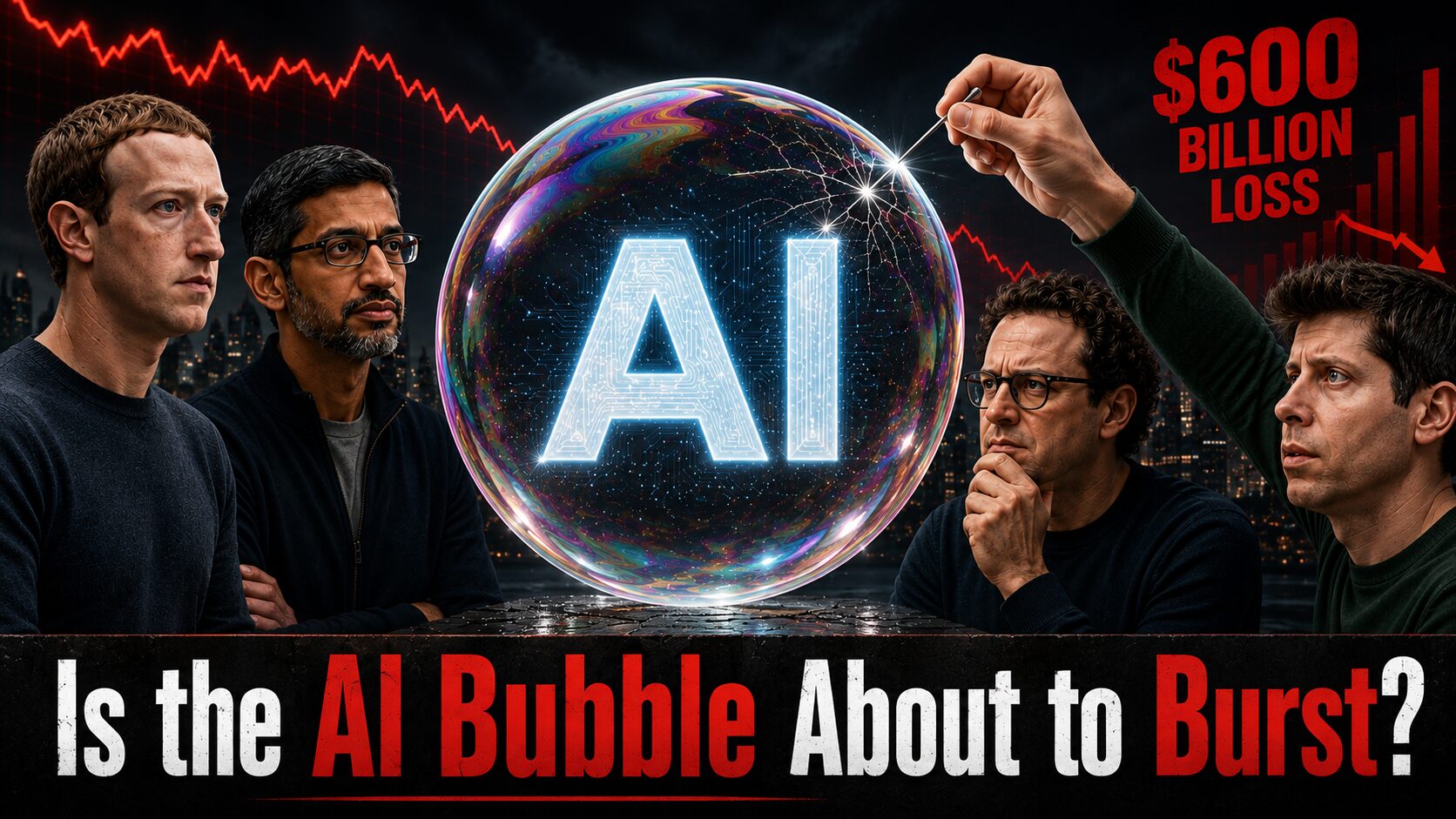
Current reality: all major AI players combined generate approximately $75 billion in annual revenue. OpenAI alone is reportedly losing $14 billion per year. That is a reported $600 billion gap between what AI needs to earn and what it currently earns.
The Cracks Showing Inside the Companies Building It
The most revealing signals are coming from inside the companies most invested in AI succeeding.
Mark Zuckerberg told Meta staff AI agents have not progressed as quickly as hoped. Microsoft is cutting AI costs by switching to its own models rather than paying Anthropic and OpenAI. Uber's CTO admitted their team blew the entire annual AI budget in four months. Palantir CEO Alex Karp said enterprises feel they are paying for tokens that create no value and that AI models have been completely and irresponsibly oversold.
According to McKinsey, 73% of enterprise AI deployments fail to hit projected ROI. BCG puts companies seeing substantial ROI at just 5%. MIT puts the failure rate for measurable financial returns at 95%.
The Report Sitting in a Drawer
On July 6 2026, NOTUS reported a completed but unpublished internal Treasury Department report prepared by career analysts warning that AI firms are more deeply embedded in the US economy than dotcom companies ever were. If financial conditions worsen or productivity targets are missed, the analysts warned of a shockwave across stock markets, private credit, data center financing, cloud providers, chip manufacturers, and utilities.
What makes this more serious than 2000 is who holds the risk. The dotcom bubble involved retail investors. Today's AI boom involves institutional investors: banks, hedge funds, and private credit firms. When an institutional bubble bursts, it threatens the financial system itself, not just household wealth.
The Treasury spokesperson dismissed the report as unvetted. The Bank of England and the IMF have expressed similar concerns publicly.
What This Means for You
Two paths forward. If AI companies raise prices to close the revenue gap, cheap AI tools disappear, and only large enterprises can afford frontier AI. If a correction happens, infrastructure gets cheaper and a second wave of adoption tends to create more durable value than the first. The dotcom bust did not kill the internet. It eliminated companies with no path to revenue.
Either way the implication is the same: building genuine AI capability now rather than surface-level tool use is the hedge that works in both scenarios.
Conclusion
The Treasury report is not saying AI will fail. It is saying the financial system now rests entirely on AI delivering on schedule. The technology is real. The gap between what is being spent and what is being earned is also real. Whether the timeline holds is the most consequential economic question of the next two years.